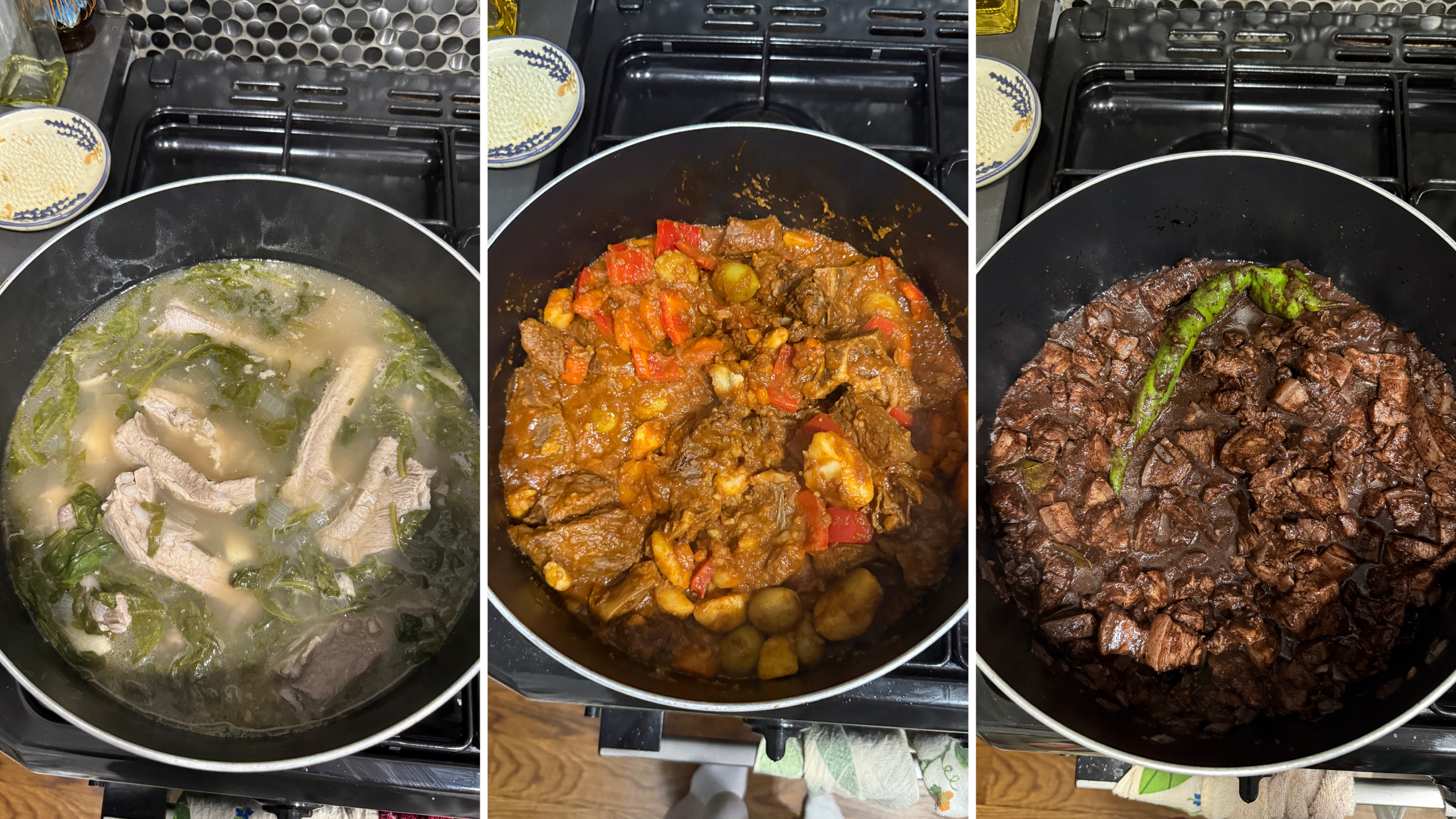
pork sinigang, beef kaldereta, diniguan
Connecting with my Filipino heritage one meal at a time
Filipino food is how I connect to my culture and heritage.
I grew up eating adobo, pinakbet, laing, kaldereta, tortang talong, longanisa, sinigang, and the list goes on. Growing up and living with my grandparents, my grandma would cook for us, typically Filipino dishes. Since I don’t speak or understand any Filipino dialects, food is the closest I feel to my heritage.
Filipino food touches my heart
Filipino food has always been a main factor in my life, with its easy accessibility through my grandma, relatives, family parties, or nearby restaurants. The Filipino community in the Bay Area is prominent, so a trip to Goldilocks, Seafood City, Jollibee, Kalesa, or Tapsilog is easy. (Check out my fav Bay Area Filipino Restaurants here.) Now, living in New York City, while, yes, Little Manila exists and there is a rise in Filipino restaurants, it’s not the most easily accessible for me.
Being an adult, I have come to realize that I want culture to live beyond my generation — I want to be able to sustain and withhold certain parts of my heritage. (Not me getting traditional, but) I want to pass down culture and tradition! Given I don’t speak any Filipino dialects, food holds the best weight in carrying culture. Additionally, not to sound morbid, but who will keep recipes alive? Naturally, I’ve appointed myself.
Stepping up to the plate
Filipino food brings me comfort, warmth, and joy.
When I take a bite of sinigang, I feel comfort.
When I take a bite of sisig, I feel my tastebuds dancing.
When I take a bite of a Filipino dish, I feel the ancestral connection.
I crave Filipino food more often than I realize, so instead of trying to find the best restaurant (Tito Rad’s), why not take matters into my own hands? Let me be the one to say: I can throw it down in the kitchen!
Though I’ve been in the kitchen while my grandma cooks, assisting in ways that I can, (though typically overruled by my slowness or lack of kitchen skills) I’ve never really learned what she was doing.
When asking my grandma about recipes or directions, I receive: “just add this.. then you do this… and this…” — there’s little to no instruction. However, now that I’ve nailed a few recipes myself, I understand her. I, too, only measure with the heart and vibes.
After watching countless TikToks and Reels, I gathered different tips and notes, proudly ending up with dishes that taste exactly like my grandma’s.
How cooking altered my brain
I’m new to the kitchen, with a little over a year of cooking experience, but I will say wholeheartedly that I have the gift. I literally move in the kitchen exactly like my grandma, and it doesn’t even occur to me until moments after.
I understand her even more and I feel Filipino af. I’ve unlocked a new level of tita in myself that I didn’t know could exist; I only cook large portions, I want to invite everyone over when I cook, and I want to cook a dish for a party.
I get excited when I get it right; I get excited when I can share my joy with others. I feel as close to cooking/food as a love language. I’ve cooked pork sinigang, pork/chicken adobo, kaldereta, and diniguan. I’ve dabbled in some silogs, too - spam, bangus, and longanisa. I genuinely cannot wait to cook more dishes and have more recipes up my sleeve.
There’s few words that can express the feeling of cooking and actually getting it right. I feel close to my grandma, though miles apart. Cooking is a language, a language that I’ve learned that I now cannot imagine my life without. It creates one of the most universal experiences: food. Food is central. Food garners community. Food creates connection. I love food.
I’m building my own collection of recipes and food memories along the way. If you want to follow my cooking journey, find me on Cookbook Log (@ukaelyle)!
mahals,
kaels
too bad ain’t me <3
(mahals: our abbreviation for “mahal kita” translating to “i love you” in Tagalog)
Check out my Substack post for a pork sinigang recipe